In a duel two realms share one board – against the computer, against a friend on the same device, or online. The goal changes: rule more lands than your opponent. If both rule the same number, gold decides.
Strength
Every piece puts its strength on its own cell and on every cell it claims:
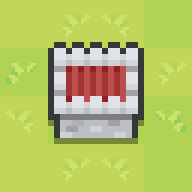
Castle
Knight
Farmer
Bishop
3
2
1
1
Strength from several of your pieces adds up. A cell belongs to whoever is stronger there; a tie means the cell is contested and belongs to nobody. A land belongs to whoever holds more of its cells.
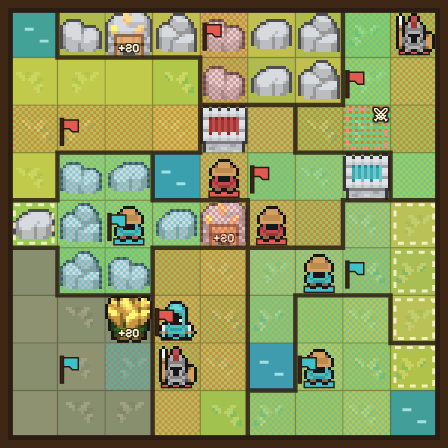
A duel after ten moves. Flags show who rules each land; the green frames are where the player to move may place a farmer – crossed swords mark attacks.
Attack
You may not build on your own land. You may build on enemy or contested land – if you are stronger there afterwards. Then that cell and every cell where you are now stronger become yours. Pieces are never removed; only their land changes hands.
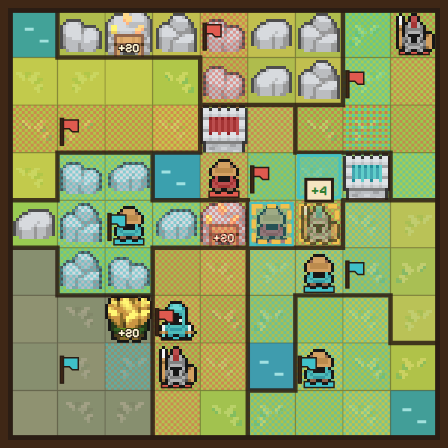
An attack preview: the outlined cells would be taken from the opponent.
Turn order
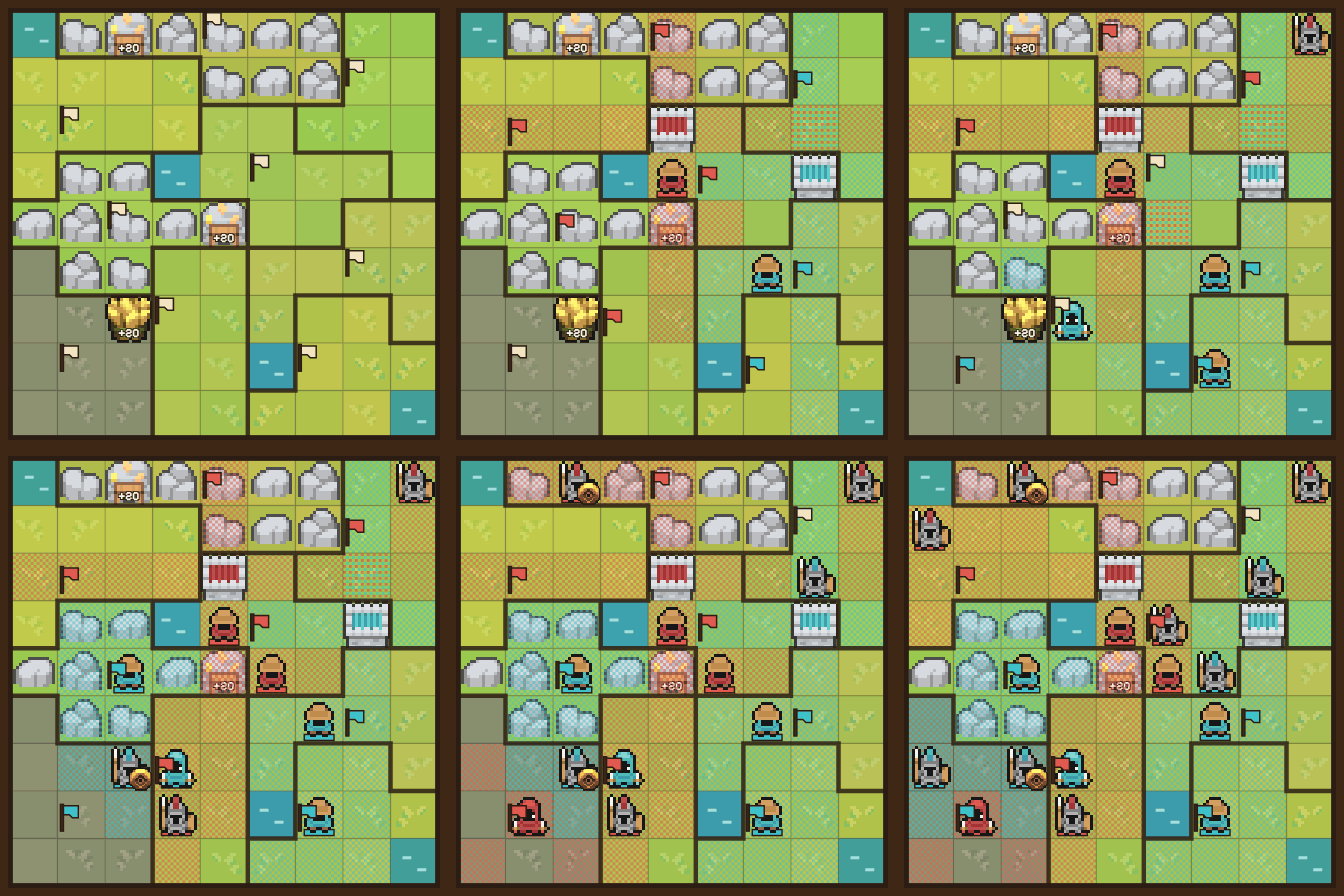
The players take turns in a snake: A places a castle, B places a castle, B moves again, then strictly alternating. B also starts with 5 gold as a small head start. If you can't move, you pass. If one player is stuck and behind, the game ends at once – the stuck player's land can only shrink.
Two "Hard" computer players, eighteen moves.
Online duels
Quick play pairs you with another searching player. Between two accounts the duel is rated and changes your glory. If nobody shows up, the computer is offered after a few seconds.
Invite links and challenges to friends are unrated and may use map size, bandits, fog and a chosen law.
Every move has a time limit; when it runs out the server plays a simple move for you. Two missed moves in a row lose the duel.
 Ninelands